
 EN
EN
 AR
AR
 NL
NL
 FR
FR
 HI
HI
 IT
IT
 KO
KO
 PT
PT
 RU
RU
 ES
ES
 TL
TL
 ID
ID
 VI
VI
 TH
TH
 TR
TR
 AF
AF
 MS
MS
 UR
UR
 NE
NE
 TA
TA
 MY
MY
 UZ
UZ
 KY
KY

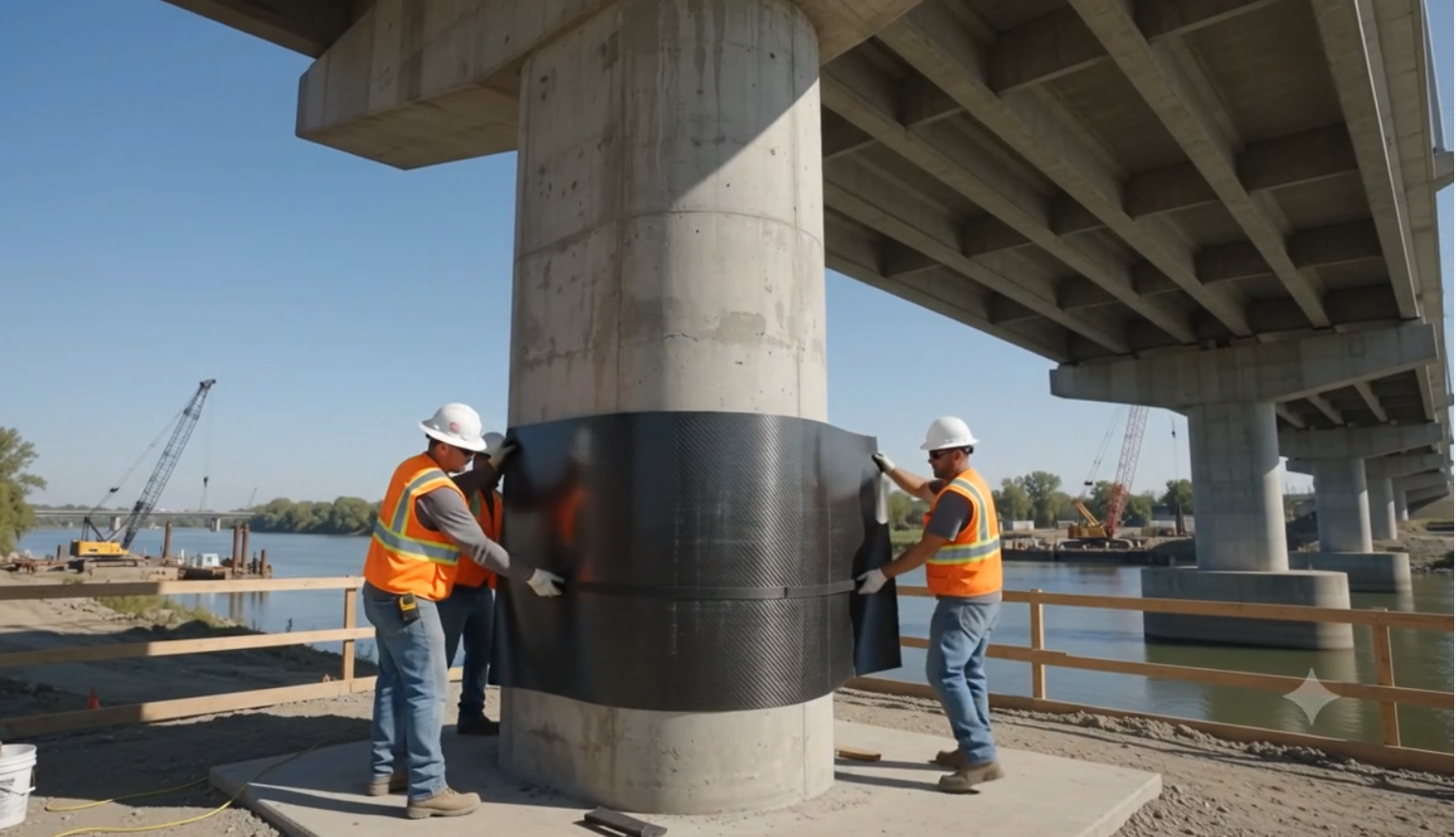
Materials and Tools Required:
1. CFRP fabric or strips
2. Epoxy resin
3. Epoxy hardener
4. Brushes or rollers for epoxy application
5. Safety equipment (gloves, goggles, respirator)
6. Measuring and cutting tools
7. Surface preparation tools (grinders, sanders)
8. Clean, lint-free cloths
9. Plastic sheeting or drop cloths
10. Mixing containers and sticks
11. Squeegees or trowels
12. Clamps or other means of applying pressure
13. Heat gun (if required)
14. Structural engineer's specifications and drawings
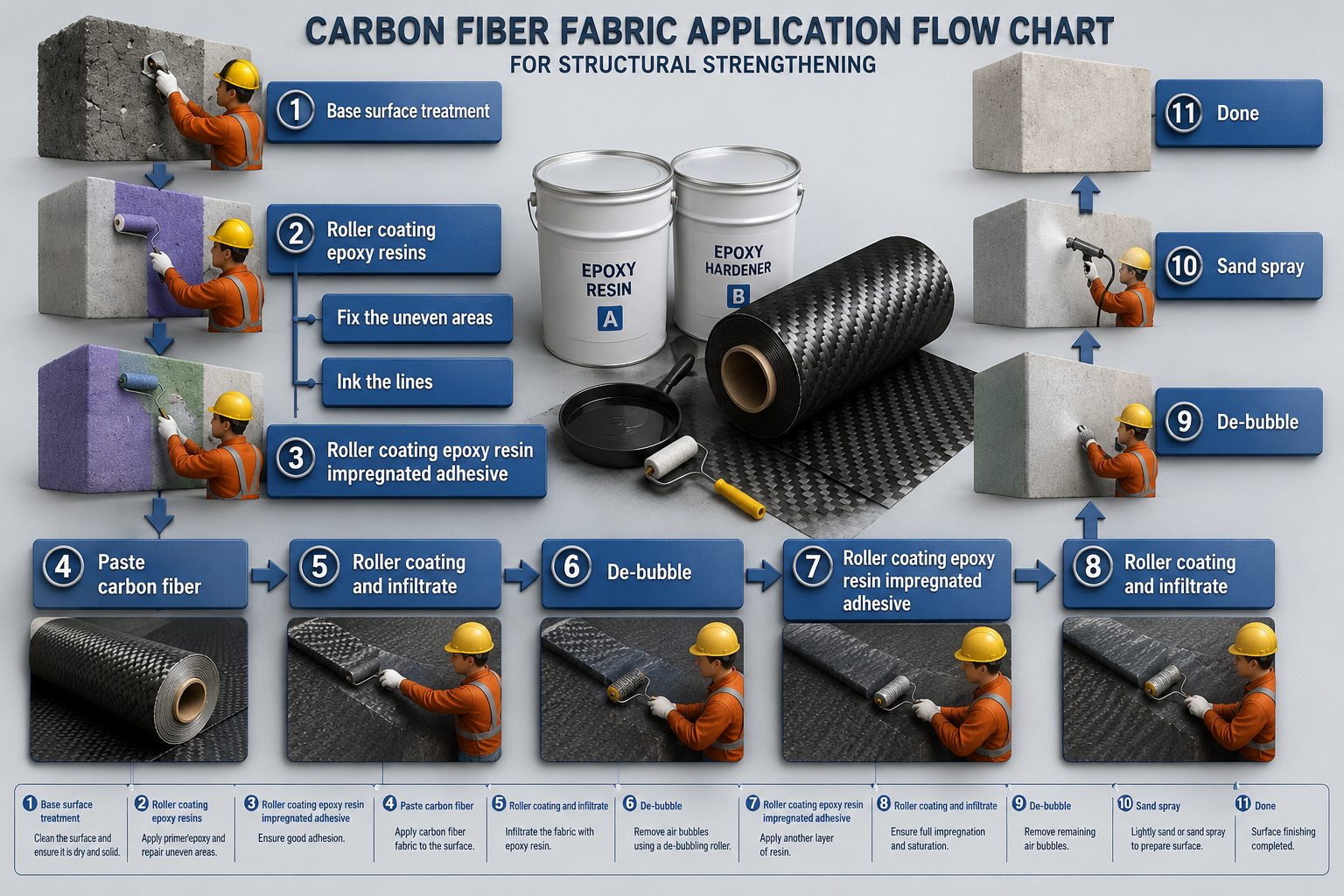
Procedure:
1. Assessment and Planning:
• Consultation required with a structural engineer to determine the specific requirements and
design for the structural reinforcement project.
• Prepare the work area by ensuring it is clean, dry, and free from dust or debris.
2. Surface Preparation:
• Grind or sand the surface of the structure where the CFRP will be applied to remove any loose
or deteriorated material, ensuring a clean and rough surface.
• Clean the prepared surface thoroughly to remove dust and debris. Ensure it's dry before
proceeding.
• The corner should be chamfered to arc-shaped (r3 10 mm).
• For any crack or damaged surface, apply crack repair resin or other surface preparation
materials.
3. Cutting CFRP Fabric:
• Measure and cut the CFRP fabric or strips to the required dimensions as specified in the
engineer's drawings.
4. Mixing Epoxy Resin:
• Follow the manufacturer's instructions to mix the epoxy resin and hardener in the correct
proportions. Ensure thorough mixing. It’s recommended to prepare the mixture at 1-2 kgs at a
time and apply it within 60 minutes.
5. Epoxy Application:
• Apply a thin layer of epoxy resin to the prepared surface using brushes or rollers.
• Place the CFRP fabric or strips onto the wet epoxy-coated surface, ensuring proper alignment
with the structural requirements.
6. Epoxy Impregnation:
• Use a brush or roller to saturate the CFRP fabric thoroughly with epoxy resin, ensuring there
are no dry spots or air bubbles.
7. Consolidation and Pressure:
• Apply pressure to the CFRP using clamps, weights, or other means as specified in the
engineer's drawings. This step ensures a strong bond between the CFRP and the substrate.
• Check for any wrinkles, bubbles, or misalignment and correct them immediately.
8. Curing:
• Allow the epoxy to cure as per the manufacturer's recommendations. This typically involves
maintaining a specific temperature and humidity level for a specified duration.
9. Quality Control:
• Inspect the CFRP installation for any defects or imperfections. Ensure it meets the engineer's
specifications.
10. Finish and Cleanup:
• Trim any excess CFRP fabric if necessary.
Clean tools and equipment with the appropriate solvent as per the epoxy manufacturer's
guidelines.
11. Documentation:
• Document the installation process, including photographs and records of epoxy mixing and
curing conditions.
12. Testing and Verification:
• Conduct any necessary structural tests to ensure that the CFRP reinforcement meets the
required strength and stability.
The CFRP installation for structural reinforcement should be performed by trained professionals
following engineering guidelines and industry standards. It's crucial to prioritize safety and quality
throughout the process.
Please contact us for more detail. .....